
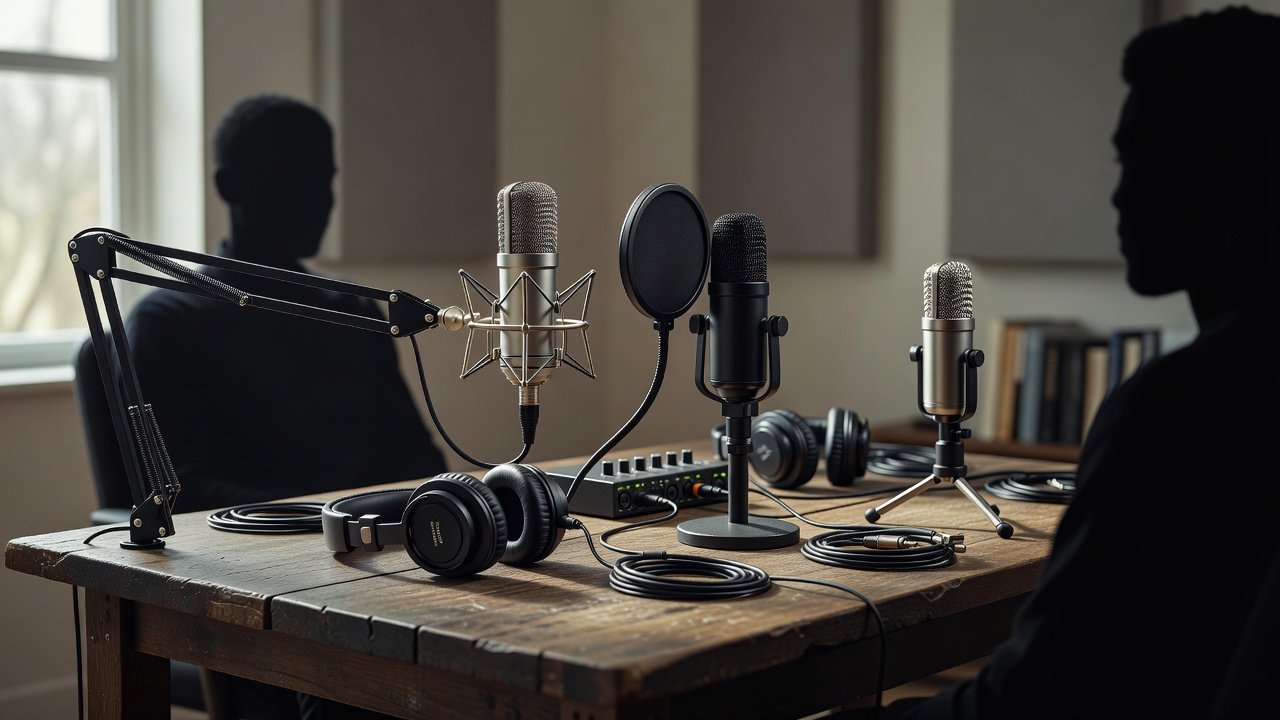
Choosing the right podcast microphone is essential for creators producing true crime podcasts, comedy shows, education podcasts, and detailed episode guides. A high-quality podcast microphone ensures clear audio that keeps listeners engaged whether you’re narrating chilling true crime cases, delivering punchy comedy timing, or breaking down complex educational topics in your reviews.

Understanding Podcast Microphone Basics for Different Genres
When selecting a podcast microphone, it’s important to match the tool to your content style. True crime podcasts often rely on intimate, conversational tones with dramatic pauses, requiring a microphone that captures subtle vocal nuances without picking up background noise from research notes or case files. Comedy podcasts thrive on energetic delivery and group banter, so dynamic microphones that handle louder volumes and multiple voices work best to avoid distortion during rapid-fire jokes or impressions.
Why Education Podcasts Need Specific Audio Quality
Education podcasts demand crisp, professional sound for explaining intricate concepts, interviews with experts, or episode guides that reference historical facts. A condenser microphone can excel here by delivering detailed frequency response that makes complex explanations easy to follow. Reviewers of comedy and true crime shows frequently note how poor microphone choice leads to listener drop-off, while strong audio elevates production value and encourages subscriptions.
The psychological impact of audio quality cannot be overstated. Research shows that listeners subconsciously associate high-quality audio with credible, authoritative content. This is particularly important for education podcasts where the host’s expertise is paramount. When listeners hear clear, well-recorded speech without artifacts, background noise, or distortion, they’re more likely to trust the information being presented and recommend the podcast to others. Conversely, murky or thin-sounding audio can make even the most knowledgeable host sound unprofessional or unreliable.
Key Features to Evaluate in a Podcast Microphone
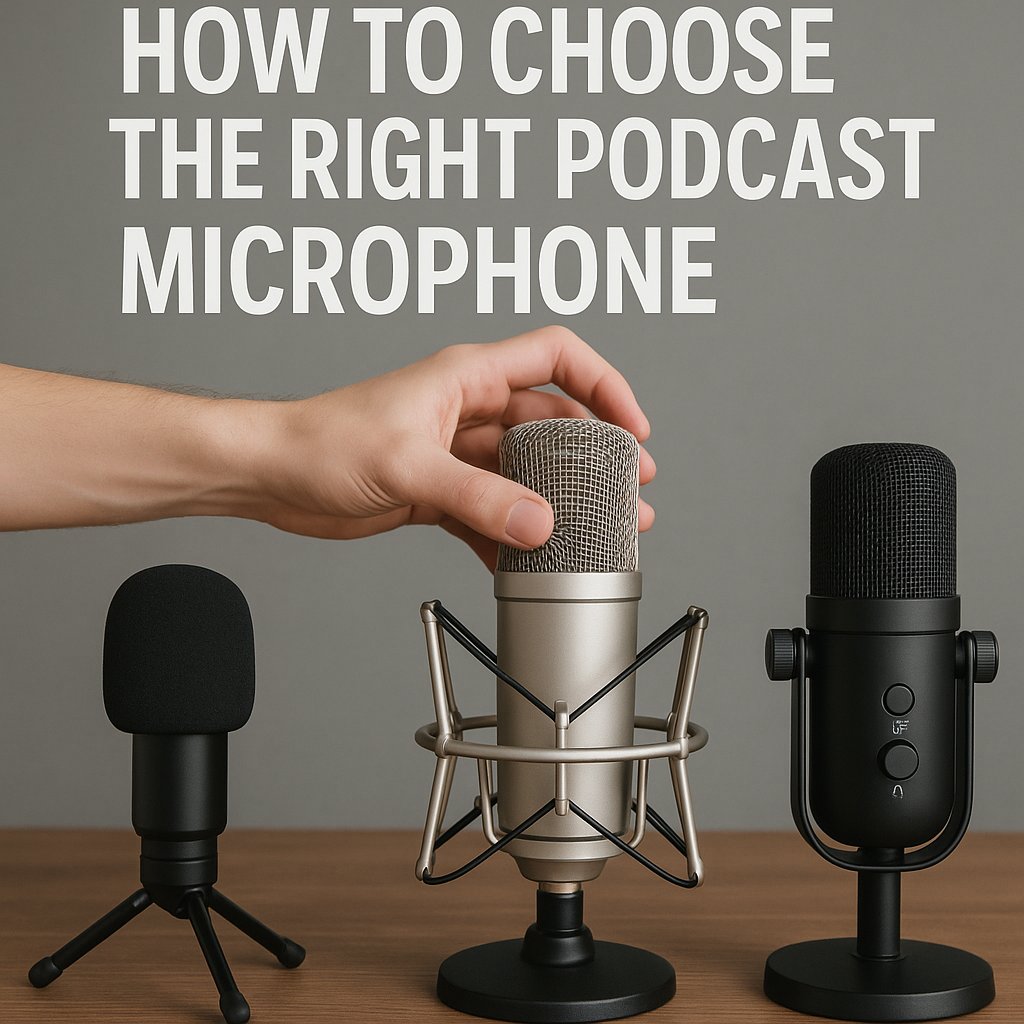
Start by considering connectivity options. USB microphones offer plug-and-play simplicity ideal for solo education podcasters recording episode guides from home offices, while XLR setups provide more flexibility for true crime teams using mixers during live recordings. Frequency response is another critical factor—look for models ranging from 20Hz to 20kHz to accurately reproduce both deep narration in true crime stories and high-pitched comedic sound effects.
Polar patterns matter greatly depending on your setup. Cardioid patterns reject off-axis sound, perfect for isolating a host’s voice amid comedy co-host crosstalk or education podcast soundboards. Sensitivity levels should align with your environment; lower sensitivity helps in untreated rooms common among independent true crime creators who record late at night to avoid household interruptions.
Another essential specification to consider is maximum sound pressure level (SPL), measured in decibels. This indicates how loud a sound can be before the microphone distorts the signal. For comedy podcasts with boisterous hosts or dynamic true crime dramatic readings, a microphone with a high SPL rating (90dB or higher) ensures that passionate delivery won’t cause unwanted clipping. Education podcasters might prioritize slightly lower SPL requirements since lecture delivery is typically more measured and consistent.
Self-noise, also called the equivalent noise level, is the inherent hiss a microphone produces when recording silence. Lower self-noise levels (ideally below 20dB) are crucial for education and true crime podcasts where quiet moments or pauses need to remain clean and noise-free. A microphone with high self-noise will require aggressive noise reduction software, which can degrade the overall sound quality and make processing-heavy editing workflows.
Top Recommendations for True Crime, Comedy, and Education Podcasts
For true crime enthusiasts, the Audio-Technica AT2020 paired with an XLR interface delivers studio-grade clarity that highlights every detail in victim interviews or forensic breakdowns. Comedy podcast hosts often prefer the Shure SM7B for its ability to tame plosives during enthusiastic rants and handle proximity effect for warm vocal tones that enhance humorous storytelling. Education podcasters creating episode guides benefit from the Rode NT-USB+ because its zero-latency monitoring allows precise self-editing of lecture-style segments.
The Electro-Voice RE20 is another excellent option gaining popularity among experienced podcast producers across all genres. Its dual-diaphragm design minimizes proximity effect while delivering consistent response even when hosts move closer to or further from the microphone during animated delivery. This makes it particularly valuable for multi-host comedy shows where participants naturally drift during conversation.
Budget-Friendly Options Versus Premium Choices
Entry-level creators can start with the Fifine K669B USB mic, which performs surprisingly well for beginner true crime narration and basic comedy sketches. Those scaling up to professional education series should invest in the Neumann U87 for unmatched fidelity during long-form interviews. Always test gain staging to prevent clipping, especially when layering sound design elements common in true crime productions or comedic skits.
It’s worth noting that microphone selection is just one component of achieving professional audio quality. The microphone itself might account for only 40-50% of the overall sound quality equation. Room acoustics, pre-amplifier quality, audio interface selection, proper gain staging technique, and post-production processing all play equally important roles. Many beginning podcasters make the mistake of purchasing an expensive microphone while recording in highly reflective rooms without adequate acoustic treatment. A moderately-priced microphone in a well-treated space will almost always sound better than a premium microphone in a poorly acoustically-treated environment.
Consider accessories like shock mounts and pop filters, which reduce handling noise during animated comedy recordings and protect against breath sounds in sensitive education content. Software integration also plays a role—many top-reviewed microphones work seamlessly with DAWs used for polishing true crime episode guides. Additionally, investing in a quality audio interface with a solid preamp will significantly improve the microphone’s performance regardless of which model you choose. An interface with clean amplification, low noise floor, and reliable converters can help extract the best possible signal from even budget-friendly microphones.
Windscreens and acoustic foam are often overlooked but invaluable for remote recording scenarios. If you’re recording interviews with true crime investigators via phone or video call, your guest’s microphone setup is beyond your control, but your own windscreen setup can prevent plosive sounds when you’re asking investigative questions. For comedy podcasts recorded in various locations, a portable windscreen offers consistent protection across different environments.
Microphone Type Comparison: Dynamic vs. Condenser
Understanding the fundamental differences between dynamic and condenser microphones helps creators make informed decisions. Dynamic microphones use a moving coil suspended in a magnetic field to generate electrical signals. They’re naturally forgiving of loud inputs, resistant to feedback, and excellent at rejecting off-axis noise. This makes them ideal for true crime podcasts recorded in less-than-ideal acoustic environments and comedy shows with unpredictable volume levels.
Condenser microphones use a charged capacitor plate that vibrates with sound waves. They offer superior frequency response detail, higher sensitivity, and more nuanced audio capture. However, they require phantom power (supplied by an audio interface or mixer) and are more sensitive to handling noise and environmental sounds. Condenser microphones excel in controlled education podcast setups where consistent room acoustics can be maintained and the environment is carefully managed.
Ribbon microphones represent a third category that’s increasingly popular among experienced podcast producers. Ribbon microphones use a thin metal ribbon suspended in a magnetic field. They deliver warm, smooth audio with natural proximity effect and excellent off-axis rejection. While historically delicate and expensive, modern ribbon microphones are more durable and afford a sophisticated sound character that premium true crime and education podcasts often seek