

Peeling back the layers on a show like Stuff You Should Know shows how this long-running education podcast locks in that blend of comedy, meticulous research, and tight storytelling to make complex topics land for listeners. Launched in 2008, it has become a staple across platforms, consistently ranking at the top of both comedy and education charts by turning everything from quantum physics to urban legends into conversational deep dives.
The origins trace back to HowStuffWorks.com, where Josh Clark and Chuck Bryant started turning dry facts into lively on-mic exchanges. What began as shorter episodes grew into a cultural staple as the team adapted to listener feedback and shifting distribution platforms. Early formats leaned straightforward, but the show evolved to weave in current events, listener questions, and even live tours. After producing hundreds of episodes, the technical reality is that this kind of maturation often comes down to refining mic technique and room tone to keep the energy consistent across longer runtimes.
In the initial years, limited production resources forced constant experimentation with formats until viral episodes on everyday mysteries drove downloads and cemented the show’s reputation. That breakthrough hinged on capturing authentic banter without over-editing the natural pauses that sell the humor. Episodes like their deep dive into the history of conspiracy theories and explorations of bizarre phenomena resonated with audiences hungry for substantive yet entertaining content that didn’t talk down to them.
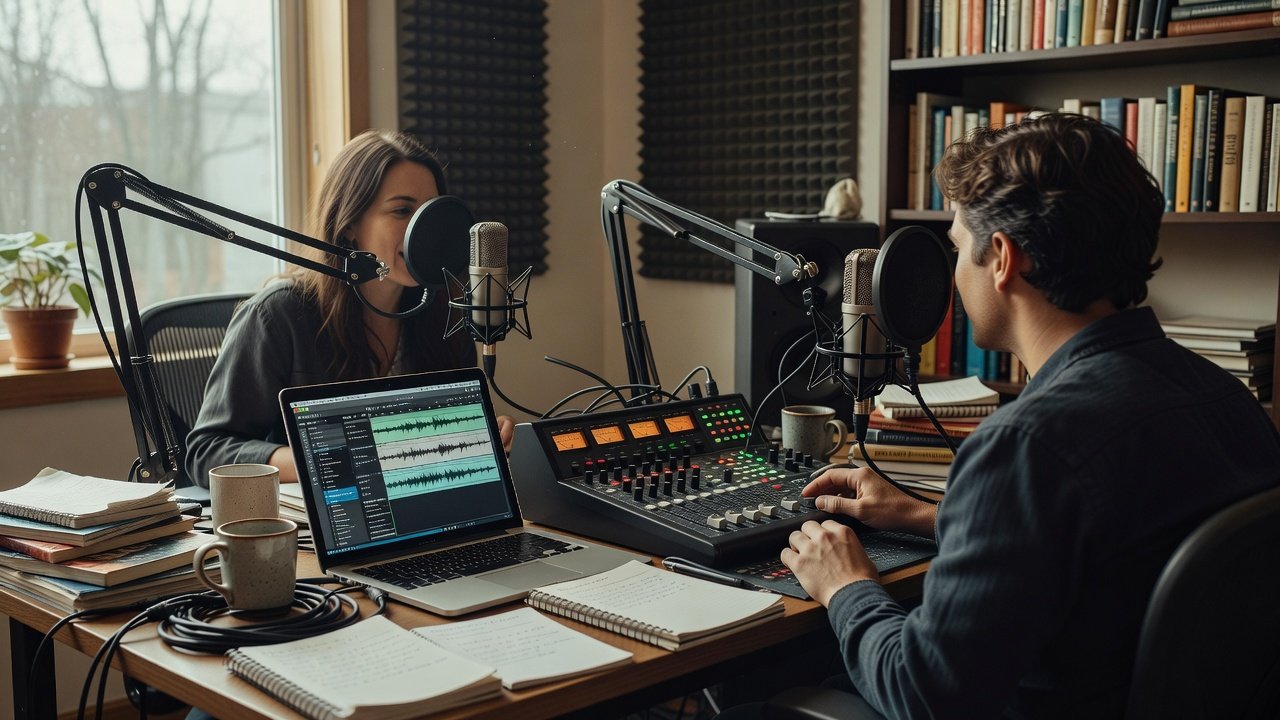
The chemistry between Josh and Chuck sits at the core. Josh’s journalism background delivers structured research and analysis straight into the mics, while Chuck layers spontaneous humor and analogies that keep things relatable. Their long friendship from the HowStuffWorks days translates into unforced banter that feels alive on playback. Behind the scenes, they prep extensively yet leave room for improvisation, which means recording setups stay flexible—usually a pair of condensers in a treated space—to preserve that conversational feel rather than anything scripted.
What listeners often don’t realize is how much of the show’s appeal comes from the deliberate pacing choices embedded in post-production. The hosts will frequently pause to let a joke land, or Chuck will interrupt Josh mid-explanation with a tangential observation that somehow circles back to the main point. These moments feel spontaneous but are often refined during editing to maintain the perfect balance between education and entertainment. The team understands that attention spans during commute listening require strategic placement of comedic beats every few minutes to maintain engagement without sacrificing information density.
Occasional guests and a research staff add fresh angles, with producers handling fact-checking and DAW edits to hold the high bar across more than 1,500 episodes. In the studio, this decision makes or breaks listener experience, because even small phase issues or mismatched levels can pull people out of the flow. The show’s technical standards have evolved considerably since 2008—early episodes were recorded with far more basic equipment, but investment in proper acoustic treatment and quality microphones became essential as the audience grew and expectations rose.
Creating each episode takes weeks of prep. Topics get chosen from listener suggestions and trending queries, then researched from academic papers, primary sources, and expert interviews. The research phase is genuinely rigorous; for an episode about a historical event or scientific concept, the team might review dozens of sources to ensure accuracy and capture nuance that casual listeners wouldn’t find in a quick Wikipedia search. Recording sessions focus on natural delivery, often requiring multiple takes to catch genuine reactions. Post-production then layers sound design, music cues, and precise editing inside the DAW to balance information density with laughs, setting it apart from drier education or true-crime formats. Researchers build detailed outlines that the hosts adapt on the fly, ensuring accuracy while keeping the wit sharp—a workflow that has shaped plenty of similar shows since.
The music and sound design choices deserve special mention. Unlike some podcasts that slap generic background music over content, Stuff You Should Know uses audio branding strategically. The intro theme is instantly recognizable, and episode-specific sonic elements help frame different segments. A transition into a historical anecdote might be punctuated by period-appropriate audio clips, while a shift to modern science could feature contemporary sound design. These choices take time to implement but significantly enhance the listening experience, making complex information feel more vivid and memorable.
Listener retention metrics show that the show’s average listener completes about 75% of each episode, which is exceptionally high for the podcast medium. This completion rate reflects the pacing discipline mentioned above—the team has mastered the art of preventing listener dropout by varying tone, introducing new angles, and knowing when to inject humor to break up dense explanations. The fact that episodes maintain consistent 45-60 minute lengths also helps; listeners know what to expect and can plan their listening around commute times or workout sessions.
The show’s expansion beyond audio has reinforced its brand and deepened fan engagement. Live tours bring the chemistry between Josh and Chuck to audiences in person, creating a different but complementary experience. Published books have allowed deeper exploration of topics that work better in long-form written format, while spin-offs have tested whether the format translates to other subject areas. Not every experiment has succeeded equally, but the willingness to experiment reflects the same creative flexibility that defined the show’s early years.
Behind the scenes, the production team at iHeartMedia has grown to support the operation, but core decision-making remains with Josh and Chuck. This stability matters; many successful shows fracture when founders lose creative control or when corporate oversight becomes too heavy-handed. The partnership between the hosts and the network has apparently struck a balance where quality remains paramount.
Key facts include over 1,500 episodes since 2008 covering more than 1,000 topics, millions of monthly downloads on Apple Podcasts and Spotify, and a consistent weekly schedule maintained for over a decade. The show has expanded into live tours, books, and spin-offs. Average episodes run 45-60 minutes, paced for commuter listening. Topics span true crime to historical comedy bits, with strong retention driven by the humor-depth mix. Produced under iHeartMedia with a small expert team, it has earned multiple award nominations in education and comedy categories and reaches a global audience with translated highlights available.
For aspiring podcast producers, Stuff You Should Know offers a masterclass in sustainable success. The show proves that quality research combined with authentic host chemistry, technical competence, and strategic editing can build an audience that remains loyal for over a decade. It’s a reminder that podcasting, despite its accessibility, still rewards shows that refuse to cut corners—whether that’s in fact-checking, audio quality, or the care taken to structure each episode for maximum impact and enjoyment.
Ultimately, the production discipline—rigorous prep, host rapport captured cleanly on mic, and listener-focused editing—explains why Stuff You Should Know stays at the front of the pack. Whether unpacking obscure history or modern science, the audio choices keep delivering value that pulls fans back episode after episode.