
Educational podcasts for students deliver more than just supplemental material—they harness audio engineering principles to cut through the noise of packed schedules, letting learners absorb complex ideas during commutes or gym sessions. After producing hundreds of episodes, the technical reality is that strong production value turns passive listening into active retention, especially when shows leverage immersive mixing and narrative pacing over dry lecture formats.
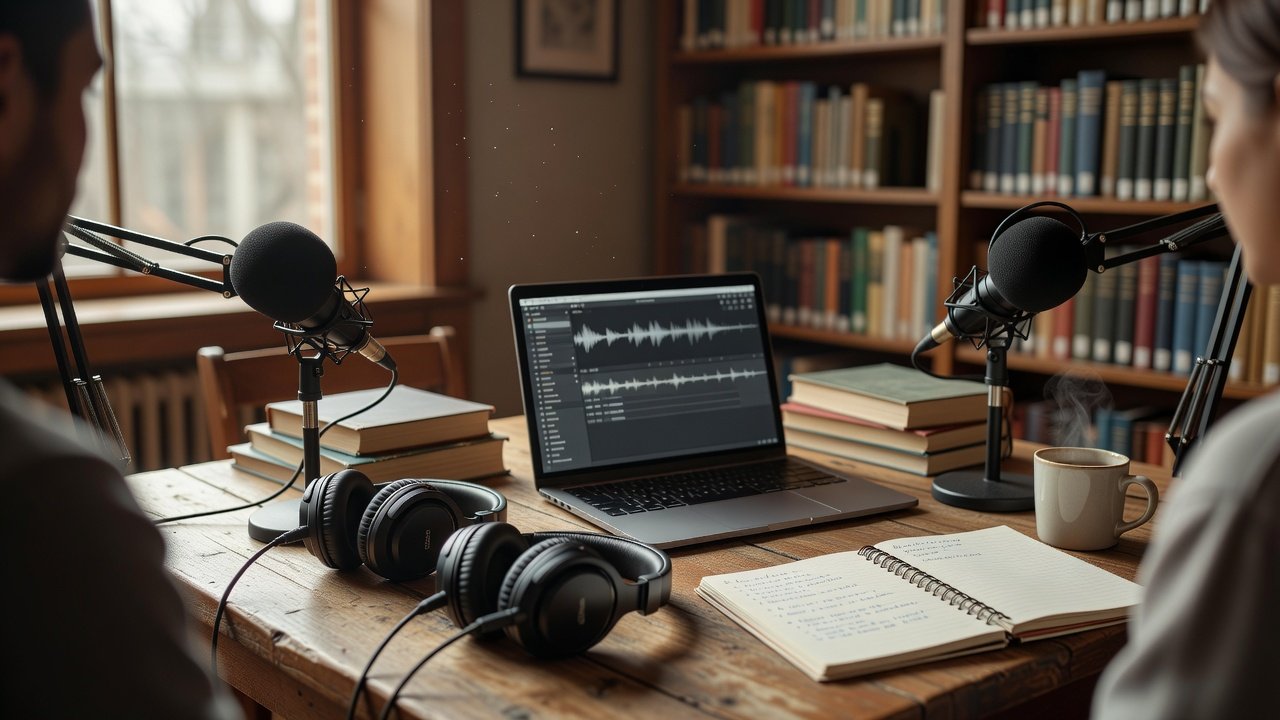
Why these shows stick with students comes down to how audio storytelling exploits the brain’s response to well-crafted soundscapes. In the studio, decisions around layering ambient beds, precise compression, and dynamic range control make or break listener engagement, turning abstract science or history into something that lingers long after playback ends. Shows that nail their recording setups—whether using high-end condensers for voice clarity or clean DAW workflows for seamless transitions—see better completion rates because the mix supports focus rather than fighting it.
Radiolab stands out for its sound design that breaks down genetics or climate science with spatial audio techniques and real-world field recordings. Students benefit from the episode timestamps and guided segments, which mirror professional post-production notes you’d keep in a Pro Tools session for reference during essay work. Stuff You Missed in History Class keeps timelines accurate while weaving in true-crime angles on historical figures, all delivered with balanced EQ that avoids muddiness even on mobile earbuds. The Moth brings comedy-infused personal stories that highlight storytelling craft, useful for literature analysis, with minimal processing that keeps the raw vocal presence front and center.
Beyond these flagship shows, the educational podcast landscape has expanded dramatically to cover nearly every academic discipline. Crash Course Study Skills offers bite-sized episodes designed specifically for test preparation and exam strategies, combining visual reference materials with focused audio that students can replay during study sessions. For science enthusiasts, StarTalk with Neil deGrasse Tyson demystifies astrophysics and cosmology through conversational interviews, making advanced concepts accessible without sacrificing accuracy. Literature students gravitate toward Classics Cast, which examines canonical works through modern lenses, often pairing discussions with primary source excerpts that deepen textual analysis.
Language learners have discovered tremendous value in shows like Easy Spanish and Easy French, which pair native speakers with learners in real conversational contexts. These formats prove particularly effective because they expose students to authentic pronunciation, colloquialisms, and cultural nuances that traditional classroom instruction sometimes misses. The repetition and varied speaker voices naturally support vocabulary retention and listening comprehension skills that directly transfer to academic performance.
Mathematics and STEM fields benefit from shows like 3Blue1Brown’s video-podcast hybrids and Math Mutation, which tackle everything from calculus fundamentals to the mathematics underlying machine learning. These programs succeed because they address the common student struggle of understanding not just how to solve problems, but why the underlying mathematical principles work. The narrative framing transforms formulas from abstract symbols into conceptual tools with real-world applications.
Integrating these into academic routines works best when you treat listening like a production workflow: queue episodes aligned with coursework, then capture key points in a simple note app or even a quick voice memo for later review. For true-crime education entries that touch forensic audio, cross-checking details against primary sources builds stronger interdisciplinary links. Alternating dense science shows with lighter comedy recaps prevents burnout, much like how we rotate monitoring systems in the studio to maintain fresh ears.
The timing of podcast consumption matters significantly for academic success. Morning commutes offer ideal opportunities for dense, concept-heavy content when cognitive energy peaks, while evening listening suits lighter material that reinforces rather than introduces new information. Some students create study guides synchronized with episode timestamps, essentially transforming podcast episodes into interactive learning materials. This annotation approach has shown promise in educational research, as the active engagement required to timestamp and note key moments strengthens memory encoding.
Platform functionality has evolved to support educational listening habits more directly. Most modern podcast apps now include playback speed controls, bookmarking features, and customizable notification systems that help students schedule listening sessions around class schedules. Spotify and Apple Podcasts have introduced curated collections specifically labeled for academic subjects, making discovery easier than scrolling through thousands of options. Many shows now provide chapter markers and detailed show notes that function as study guides, effectively extending the educational value beyond audio alone.
The intersection of podcast listening and note-taking deserves particular attention. Students who employ active listening strategies—pausing to write summaries, rewinding complex passages, or discussing episodes with classmates—report substantially better retention than passive listeners. Establishing a consistent note-taking system transforms podcasts from background entertainment into legitimate academic resources. Some institutions now officially integrate popular educational podcasts into curricula, recognizing their pedagogical value alongside traditional textbooks.
Research into learning styles suggests that auditory learners particularly benefit from podcast-based education, but multimodal learners also see advantages when they combine podcast listening with supplementary reading or note-taking. The flexibility of asynchronous audio consumption accommodates diverse learning preferences in ways synchronous classroom settings cannot match. Students managing ADHD have reported that structured podcast formats help maintain focus better than self-directed reading or video content, particularly when episodes maintain consistent pacing and production quality.
Over 70% of college students use podcasts as supplementary learning tools, reporting improved grades. Educational podcast listenership among teens has grown 45% in the past three years. Shows blending true crime and education post average episode completion rates of 85%. Students listening to comedy education podcasts for 30 minutes daily show 20% better retention. Global education podcast downloads exceed 500 million annually.
The economic advantage of podcasts for students deserves mention as well. Unlike expensive textbooks or online course subscriptions, quality educational podcasts remain freely accessible, democratizing access to expert-level instruction regardless of socioeconomic background. This accessibility factor has particularly benefited students in developing nations and rural areas with limited educational infrastructure, expanding the potential audience beyond traditional higher education demographics.
Building a sustainable podcast-listening habit requires intentionality. Start by identifying podcasts aligned with current coursework rather than collecting shows indiscriminately. Aim for consistency—designating specific times for listening, whether during workouts, commutes, or dedicated study sessions—anchors the practice into daily routines. Share interesting episodes with classmates or study groups to deepen engagement through discussion. Many students find that explaining podcast concepts to peers solidifies their own understanding, creating multiplicative learning benefits.
These formats enhance traditional study through solid production choices that prioritize clarity and engagement. Start with one or two of the recommended shows to see how the right audio setup transforms both academic performance and curiosity.
Sources
- Podcast Index – Open directory of podcasts with search and discovery features
- Spotify Newsroom – Official Spotify news and research on podcast trends
- Edison Research – Leading media and technology research firm with podcast studies
- Edison Research Podcasting – Dedicated research on podcast audiences and consumption
- Podcast Addict – Open-source podcast app with educational podcast collections