
The podcast space keeps growing fast, with millions of listeners hitting play every day. Whether you’re chasing a platform for your expertise, storytelling, or a passion project, launching a show is more doable than ever. After producing hundreds of episodes, the technical reality is that solid content still needs the right capture chain and distribution path to actually reach ears without sounding like an afterthought.
Before you roll tape, nail the three pillars: content, recording, and getting the files out. Content might be king, but without a clean signal path and a reliable host, listeners bail fast. In the studio, this decision makes or breaks listener experience—starting lean is fine, then scaling gear as downloads climb.
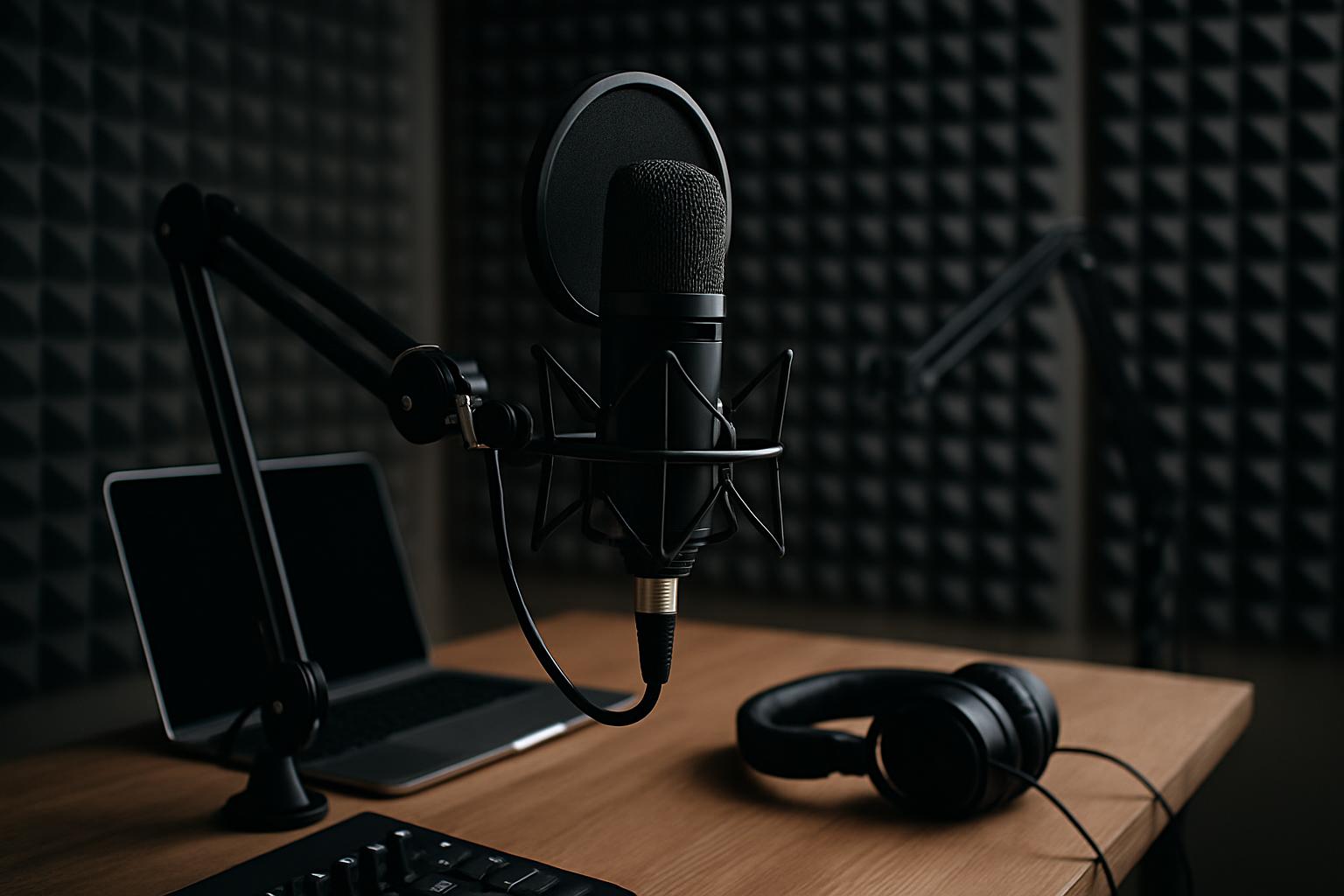
Most new voices do best with a simple USB mic like the Audio-Technica AT2020USB or Blue Yeti. These hit your computer directly and cut setup time. Once the show finds traction and your style solidifies, stepping up to a dynamic like the Shure SM7B through an interface such as the Focusrite Scarlett 2i2 delivers tighter low end, better gain staging, and real control over the signal. Professional rooms often reach for something like a Neumann U87 or Electro-Voice RE20, paired with a Behringer X2222USB or PreSonus StudioLive, plus high-end cans like Beyerdynamic DT 880s. Beginner rigs land around $150–250 using free tools like Audacity or GarageBand; intermediate builds hit $600–900 with Adobe Audition or Descript; full pro kits push $2,000–5,000+ into Logic Pro or Studio One.
When selecting your microphone, consider your recording environment and long-term goals. USB condensers work well in treated spaces where ambient noise is minimal, while dynamic mics excel in untreated rooms because they naturally reject off-axis sound. If you’re recording interviews or multi-person shows, an XLR setup gives you the flexibility to add additional microphones, run separate tracks, and implement proper gain staging across multiple sources. The investment in a basic audio interface pays dividends once you start mixing multiple voices or want to add music beds and sound effects without degradation.
Your room acoustics set the floor for everything that follows. Soft surfaces—carpets, curtains, even a quick blanket fort—cut reflections far better than tile or glass. Keep the mic six to eight inches from your mouth, slightly off-axis, with a pop filter in place. Monitor through closed-back headphones during takes so you catch noise or level jumps before they hit the DAW. After recording, the edit pass is where you strip dead air, tame background hum with noise reduction, normalize peaks, and drop in intro/outro beds. That post-production polish is what keeps retention high once listeners subscribe.
Beyond the initial setup, establishing a consistent recording schedule prevents gear fatigue and keeps your workflow streamlined. Block out the same time each week for recording if possible—your voice will be fresher, your energy more consistent, and listeners will anticipate new episodes. Many successful podcasters batch-record multiple episodes in a single session, which cuts down on setup overhead and allows you to maintain consistent audio quality across releases. Batch recording also gives you a buffer, so technical issues or life interruptions don’t derail your publishing schedule.
Hosting choices matter just as much for reach and analytics. Spotify for Podcasters (Anchor) gives unlimited storage and a free tier with basic stats plus ad marketplace access—ideal for zero-cost starts. Buzzsprout offers a limited free plan then $24/month tiers with detailed numbers and built-in monetization. Podbean scales from free to $99/month with strong subscription tools. Transistor skips the free layer but provides unlimited storage and advanced analytics from $19/month for creators ready to treat the show like a business. When evaluating a host, check their submission integrations—top-tier platforms connect to Apple Podcasts, Spotify, Google Podcasts, and Amazon Music automatically, so your show reaches every major directory without manual submission hassles.
Distribution across all major platforms is non-negotiable for growth. Your podcast host handles the technical syndication, but you still need to verify your show appears on Apple Podcasts, Spotify, Amazon Music, Google Podcasts, and YouTube Music. Some niche platforms like Podchaser, PlayerFM, and Pocket Casts pull feeds automatically once your show is listed on the major hubs. Building presence across all these directories multiplies your discoverability—listeners have platform preferences, and being wherever they already listen removes friction from subscription.
Episode length lands best between 25 and 60 minutes for most formats; 30–45 keeps momentum without dragging. Release weekly if you can sustain it—consistency beats volume for both algorithms and audience habits. The algorithmic advantage of weekly releases is real: platforms reward shows with reliable cadence by surfacing them in discovery and recommendation feeds. If weekly feels unsustainable, bi-weekly is better than erratic uploads. Many successful shows start with weekly episodes to build momentum, then scale back to bi-weekly once they’ve established an audience and sustainable workflow.
Solo hosting is completely viable and gives total control; co-hosts add chemistry but complicate scheduling. The choice depends on your content type. Interview shows benefit from a strong co-host who can ask follow-up questions and manage conversation flow while you focus on technical quality. Solo commentary or narrative shows give you creative freedom and eliminate coordination overhead. Many new podcasters underestimate how much easier solo hosting is during the launch phase—you control every variable, schedule changes don’t derail production, and there’s no friction between co-host visions.
Growth comes from hitting every directory, clipping highlights for social, and guesting on established shows. Short-form clips repurposed across TikTok, Instagram Reels, and YouTube Shorts drive traffic back to your full episodes. Guest appearances on established podcasts in your niche introduce you to primed audiences and create cross-promotional opportunities. Many shows offer guest slots to emerging creators—pitch shows slightly larger than yours with related audiences. The goal is exposure to listeners already interested in your topic, not cold audiences who have to be convinced to care.
Monetization usually waits until you clear a few thousand downloads a month. Ad networks like Spotify Ad Marketplace or Megaphone pay $18–50 CPM once you qualify. Premium tiers on Patreon or Apple Podcasts Subscriptions, affiliate links, and direct listener support via Ko-fi all work earlier if your niche is tight. Selling courses or consulting built from the same audience turns the show into a direct sales engine. The most successful independent podcasters treat their show as the top-of-funnel marketing tool, using it to build authority and trust before monetizing through products or services. This approach takes patience but often yields higher lifetime value per listener than relying on ad networks alone.
Building community beyond the podcast itself accelerates growth. A simple email list collected through a landing page lets you communicate directly with listeners, announce new episodes, and pitch premium offerings. Discord or Slack communities create spaces for fans to discuss episodes and deepen engagement. These direct relationships become invaluable when you’re looking to monetize or launch new projects—you have a warm audience ready to support you.
The gear ladder and workflow details stay the same regardless of budget. Start clean, stay consistent, and the production quality will compound.
Sources
- Podcast Index – Independent podcast hosting and discovery platform
- Spotify Newsroom – Podcasts – Official Spotify podcast resources and announcements
- Edison Research – Podcast Research – In-depth podcast industry studies and trends
- Apple Podcasts – Apple’s official podcast platform and submission guidelines
- Buzzsprout – How to Start a Podcast – Practical guide for podcast beginners